Home | What's New | About CP | Site Map | Email

Home > filename

Architecture House Styles Northeast Houses Mid-Atlantic Houses South Houses Midwest Houses West Houses Photo Archives

Far too often I find myself in places where people simply have no appreciation for architecture. They have no interest in the history of their home, or the qualities that make it unique. Whenever I start feeling badly about the general public's lack of aesthetics, I think about the hidden neighborhoods in cities across the country where people really do care -- where they take the time to learn about the Arts and Crafts style and restore old homes to their original beauty.

Such a place is Toledo's West End. A visit to the the city's "Old West End Festival" in June is a must-see for anyone interested in restoration and history. According to one Toledo resource, "The city's historic "Old West End" is the largest collection of Victorian homes east of the Mississippi and is the largest turn-of-the-century residential neighborhood in the U.S." There are plenty of Victorians, but I would classify many of them as transitional or eclectic Craftsman, and there are far more wonderful examples of classic Arts and Crafts style.

The neighborhood is on the western edge of downtown Toledo and was the home of many prominent citizen at the turn of the century. As in most inner-city areas, people began moving into the suburbs as the city expanded. The West End fell into a decades-long period of decline during which it became crime-ridden and undesirable. Efforts by the city to revitalize the area have paid off. Incredibly low real estate prices, low taxes and other city-sponsored incentives have lured many young educated professionals to the neighborhood. The West End's transition give you the perfect opportunity to see homes in various states of restoration. It certainly was an inspiration to see so many people working on their homes -- and everyone KNEW about the Arts and Crafts style...it doesn't get much better than that.

The Festival offers the chance to go inside a half-dozen or so of these old homes, but there is no reason to postpone a visit until the next Festival held twice a year. If you love looking at beautifully restored Arts and Crafts home, and like to see a neighborhood that cares about its history, I urge you to pay a visit to Toledo. If you're within 200 miles, it's definitely worth the drive. If not, then take a virtual tour below and read the photo guide.


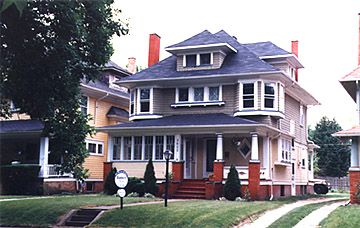
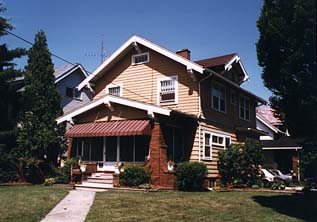
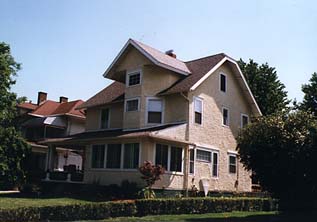
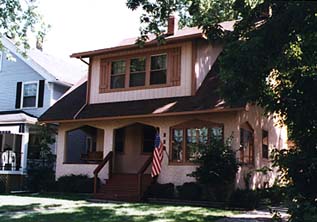
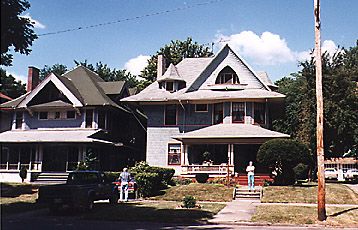
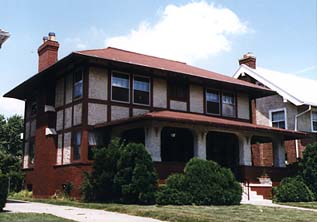
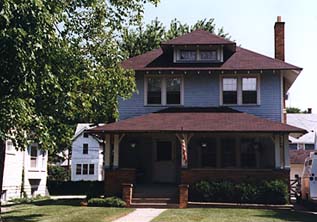
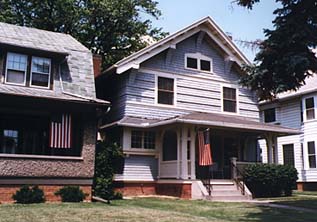
Thumbnails for Toledo's West End

For your convenience, photos open in a separate browser window. You must close the photo window before viewing another image. Be patient while photo loads.

Photo Guide:

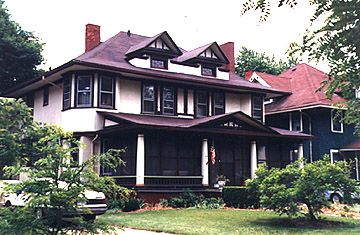
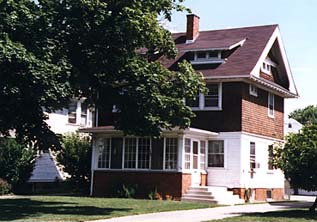
  • 1. Notice the bay windows built at the corners of the house -- a Frank Lloyd Wright influence.

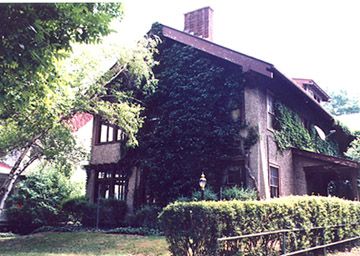
  • 2. This rough concrete stucco home is situated with its front facing the side of the lot. The back of the house (look at the left side of this photo) is lined with tall windows. It is very possible that the house was turned sideways on the lot so that the rear windows could catch the western sun. Also note how close the windows are to the corner of the house. Definitely Frank Lloyd Wright influenced.

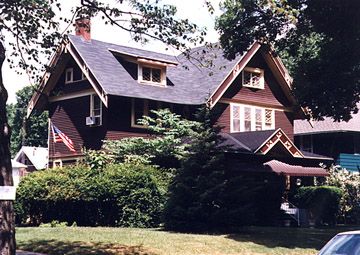
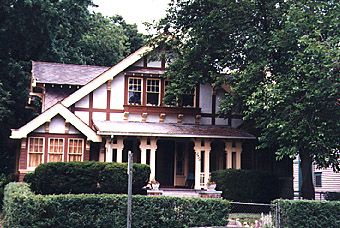
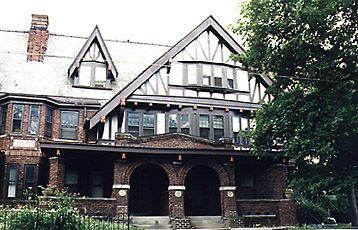
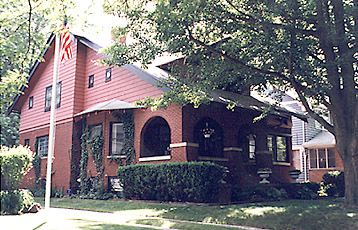
  • 3. I loved this Tudor Craftsman. The only thing I really didn't like was the aluminum awning over the front porch, but even that wasn't a major flaw.

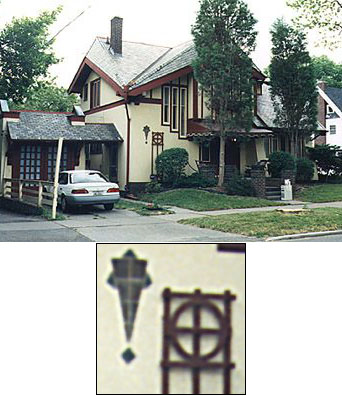
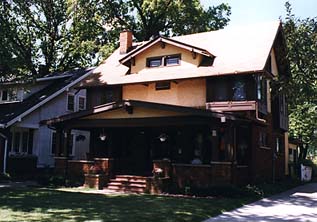
  • 4. I don't have any information about this house, but I was surprised by the distinctive, irregular windows, which are original to the house, and the Mission-style decorative tile pattern in the stucco.

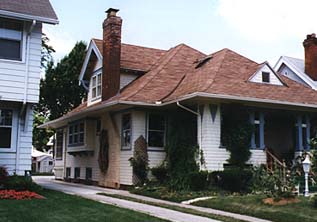
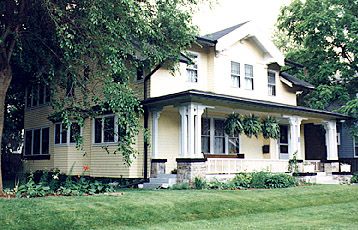
  • 5. A lovely, eclectic Craftsman bungalow.

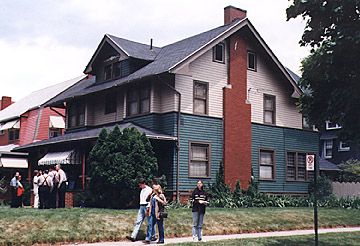
  • 6. The Blevins-King Homes, built in 1912. This house was nearly burned to the ground in the early 1980's after tenants burned all their furniture in the oversized fireplace to keep warm. The current owner, an antiques dealer, undertook a massive remodelling project and turned a house slated for demolition into a showpiece. This is a wonderful example of citizens turning a blighted area into a thriving neighborhood.

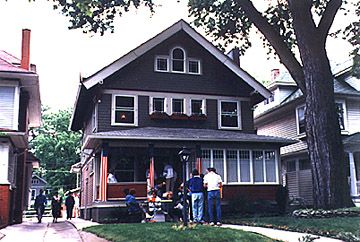
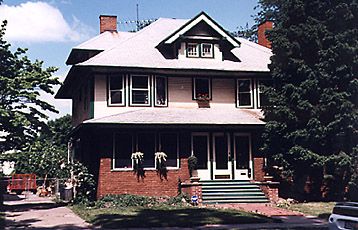
  • 7. The Blevins-Lucarelli Home, built in 1909. Here is a description of the American Foursquare taken from the West End Festival house tour program: "The Four-Square is a uniquely American style, popular through the 1930's. While not always built as a square building, its blunt, straight-forward design provided the most house for the money. It's name fits its description perfectly: a spacious room is usually found at each of the four corners on each floor, with minimal hall- or stairway area, producing the most living space and the least wasted space."

  • 8. The Eyster-Babcock-Freese Home, built in 1911. According to its current owners, this Foursquare has what may be the longest built-in buffet in the Old West End (oak top with shelves and leaded glass doors spanning about 20 feet). Restoration of this house included removal of an enclosed porch added by the previous owners, replacement of woodwork removed in the 1940's, refinishing the hardwood floors, and interior and exterior painting. When I walked into this house, I truly felt like I was stepping back in time. It's a cliche, but I found this house simply charming.

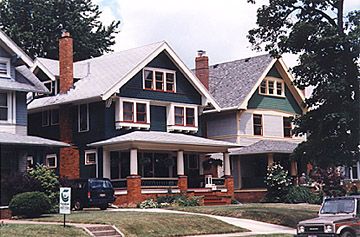
  • 9. A stately Foursquare (notice the bay windows). Can you believe that this fully restored house was being sold for under $120,000???

  • 10. A nice home with east/west exposure. Front porch has been enclosed.
  • 11. Unusual rough concrete stucco Craftsman style
  • 12. Typical bungalow
  • 13. All-original Craftsman home
  • 14. Charming, well-kept bungalow
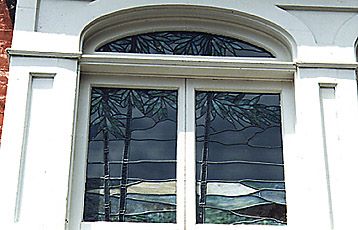
  • 15. Palm tree art glass from a large turn-of-the-century home
  • 16. A Tudor Craftsman townhouse containing 6 dwellings
  • 17. An transitional house with foursquare and Queen Anne influences
  • 18. Great Craftman home with inlaid tile on porch pillars
  • 19. American Foursquare
  • 20. Craftsman style
  • 21. American Foursquare
  • 22. A well maintained bungalow
  • 23. A large Craftsman (circa 1905)
  • 24. Craftsman style
  • 25. The epitome of an American Foursquare

Back to Top